
Every driver has a story about sitting at a shipper for six hours and getting paid nothing for it. Or rolling 100 miles to a pickup only to hear the load “isn’t ready, it got canceled.”
Detention, TONU, and layover pay exist for exactly these situations. The problem is a lot of drivers never collect, not because they don’t deserve it, but because the paperwork or the timing wasn’t there. Here’s how to fix that.
Quick definitions
- Detention: pay for waiting beyond the free time at a shipper or receiver. Commonly free time is around 2 hours, then an hourly rate kicks in.
- TONU (Truck Ordered, Not Used): a flat fee when a load is canceled after you’ve been dispatched or arrived at pickup.
- Layover: pay when a load can’t be loaded or delivered the same day and you’re held over to the next day.
The exact amounts and rules are whatever’s written on your rate confirmation. That’s the whole point of this post: get it written.
Step 1: Get the terms on the rate con
Before you sign a rate confirmation, look for:
- How many hours of free time at each stop
- The detention rate per hour, and whether there’s a daily cap
- The TONU amount
- Layover terms
- What documentation the broker requires to approve detention
If any of it is missing, ask for a revised rate con before pickup. “Can you add detention after 2 hours at $50/hr and a $150 TONU?” is a normal request. Brokers get it all the time. It’s also something you can trade for during rate negotiation when the line-haul number won’t budge.
Read the fine print too. Some rate cons say detention only applies if you arrive on time, or if you notify the broker within a certain window. Those rules are why many claims get denied.
Step 2: Be on time (and prove it)
Detention almost always depends on you arriving on time for your appointment. Show up 30 minutes late and most brokers will say the clock never started.
When you arrive:
- Check in at the gate or shipping office and note the time
- Text or email the broker: “Checked in at 0758 for 0800 appointment”
- Your ELD location and timestamps back you up
That one message is the foundation of your detention claim.
Step 3: Notify the broker before detention starts
Don’t wait until you leave to say you were held for five hours. Most brokers want a heads-up when you’re approaching the end of free time so they can push the facility.
A simple message works: “Still waiting at shipper, checked in 0758, not in a door yet. Will be in detention at 1000.” Then another update when you’re loaded or unloaded with the out time.
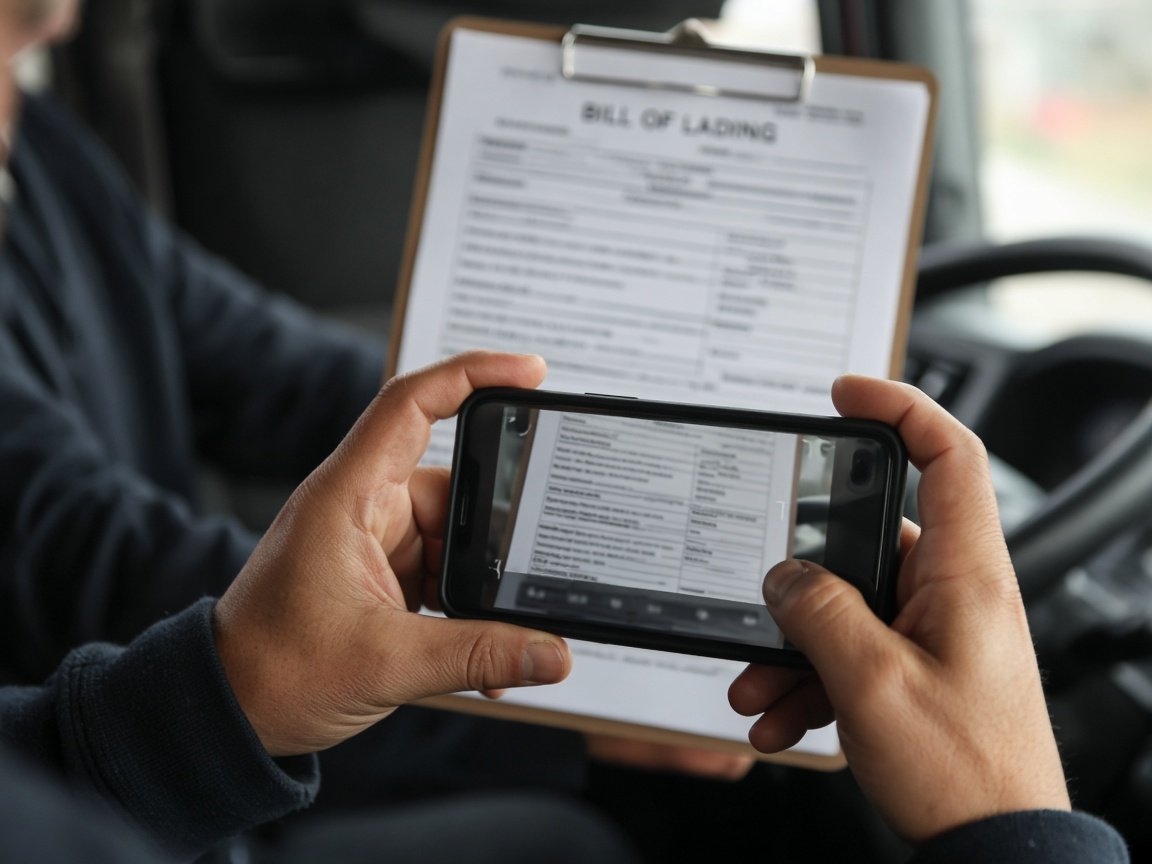
Step 4: Get in and out times on the BOL
This is the piece most drivers skip. Ask the shipper or receiver to write your in and out times on the BOL and sign or initial it. Some facilities won’t do it. If they won’t, your messages to the broker and ELD records become your proof.
When it works, a BOL that says “In: 0758, Out: 1340” with a signature is about the strongest detention evidence you can have.
Step 5: Bill it right away
Send detention with your delivery paperwork, not three weeks later. Include:
- The signed BOL/POD with in and out times
- The time you checked in and when you notified the broker
- The math: total time, minus free time, times the hourly rate
Example: in at 0758, out at 1340. That’s 5 hours 42 minutes. Minus 2 hours free time leaves 3 hours 42 minutes. Depending on the broker, that may be billed as 3.5 or 4 hours at the agreed rate. Keep it clean and simple so the broker’s billing team can approve it fast.
TONU: what to do when a load cancels
If a load cancels after you’ve been dispatched, or you arrive and it isn’t there:
- Get the cancellation in writing (text or email from the broker)
- Take a photo showing you were at the facility if you arrived
- Reference the TONU amount on the rate con and send an invoice for it
If there’s no TONU on the rate con, you can still ask. Some brokers will pay something to keep a good carrier happy. But it’s much harder without it in writing.
Layover: when you’re stuck overnight
Layovers happen when a receiver pushes your appointment to the next day, or a shipper can’t load until tomorrow. Get the new appointment in writing from the broker, confirm the layover rate, and document the original appointment you showed up for.
Also think about your hours. A layover in the wrong place can throw off the next two loads. Sometimes it’s worth asking the broker to reschedule rather than eating the day.
The paperwork habit that gets you paid faster
Detention or not, you get paid when your paperwork is in. Make this a routine at every delivery:
- Check the BOL/POD is signed, dated, and has the right count or notes
- Note any shortages, damage, or seal issues on the BOL before you sign
- Scan or take clear, flat photos in good light, every page
- Send to the broker and factoring company before leaving the dock
- Keep lumper receipts and scale tickets with the load file
Blurry, cut-off, or missing pages are the number one reason payments get delayed. A good scanning app takes 30 seconds and saves you days.
Keep a simple load file
For every load, keep the rate con, BOL/POD, lumper receipts, detention messages, and any revised rate con together. A folder per week on your phone or cloud storage is enough. When a broker questions a charge two months later, you’ll have it.
For more on building good habits from the start, see our posts on owner-operator dispatch tips and your first 90 days with a new MC.
Tired of chasing detention yourself?
Haulway Logistics negotiates detention and TONU terms upfront, keeps the broker updated while you’re waiting, and follows up on paperwork so you get paid for the time you actually spent.
If that sounds like a weight off your shoulders, register your truck or get in touch with us.